


bound4blue: eSAIL® Technology, a Proven Path to Maritime Decarbonization and Efficiency
As shipping accelerates its transition toward lower-carbon operations, the industry increasingly requires solutions that deliver immediate, measurable results rather than projected future benefits. While alternative fuels continue to evolve, vessel operators are actively seeking technologies capable of reducing fuel consumption and emissions today.
Bound4Blue’s patented eSAIL® suction sail technology represents one of the most advanced wind-assisted propulsion solutions currently available. By combining aerodynamic efficiency with a fully automated control system, eSAIL® enables vessels to harness wind power more effectively than conventional rigid sails while maintaining operational simplicity. Most importantly, the technology has now moved beyond theoretical calculations and simulation studies, with verified results demonstrating significant reductions in fuel consumption and carbon emissions on commercial vessels.
The Evolution of Wind-Assisted Propulsion
Wind-assisted propulsion is increasingly recognised as a practical contributor to maritime decarbonization. However, not all wind-propulsion technologies have the ability to offer combined operational flexibility, aerodynamic performance. and low maintenance needs.
The development of suction sail technology addresses some of the traditional limitations associated with rigid wing sails by actively controlling the airflow over the sail surface. Through the use of suction areas, a moving flap that offers dynamically variable geometry, and integrated suction fans, eSAIL® enhances lift generation while continuously preventing aerodynamic stall.
Unlike passive systems that depend solely on natural airflow, eSAIL® uses controlled boundary-layer suction to maintain efficient aerodynamic performance. This enables higher thrust generation from a comparatively compact structure, reducing both weight and deck space requirements.
Engineering Simplicity Combined with Automation
A key feature of the eSAIL® concept is its emphasis on operational practicality. The system incorporates an automated control system housed within the sail structure, as well as an orientation mechanism that continuously adjusts the sail position according to prevailing wind conditions.
The design focuses on structural simplicity and reliability, resulting in low maintenance requirements and ease of operation. For shipowners and operators, this is particularly important, as energy-efficiency technologies should maintain low OPEX and must not create additional operational burdens for onboard crews.
Another significant advantage highlighted in the technology is its suitability for installation in hazardous areas, expanding easily the application of the system to tanker and other vessel segments where equipment certification requirements are particularly demanding, since eSAILs® are installed at a height of over 4 meters from deck, thus out of the Hazardous Zone 2 area.
Competitive Advantages of eSAIL®
The performance benefits of eSAIL® originate from its ability to maintain lift and generate propulsion under conditions where conventional aerodynamic systems would experience reduced effectiveness.
The technology offers effective performance across a broad range of wind directions, including upwind conditions. By preventing aerodynamic stall, the sail can continue producing thrust at higher wind angles, resulting in higher propulsive contribution. This enhanced aerodynamic efficiency enables the delivery of equivalent propulsion power from smaller equipment when compared with conventional sail technologies.
The combination of high lift generation reduced structural weight, limited deck footprint, and negligible maintenance requirements creates a compelling value proposition for owners seeking both environmental and economic returns from wind-assisted propulsion investments.
Case Study: The Bow Olympus Installation
Perhaps the most compelling aspect of the technology is its demonstrated performance in service.
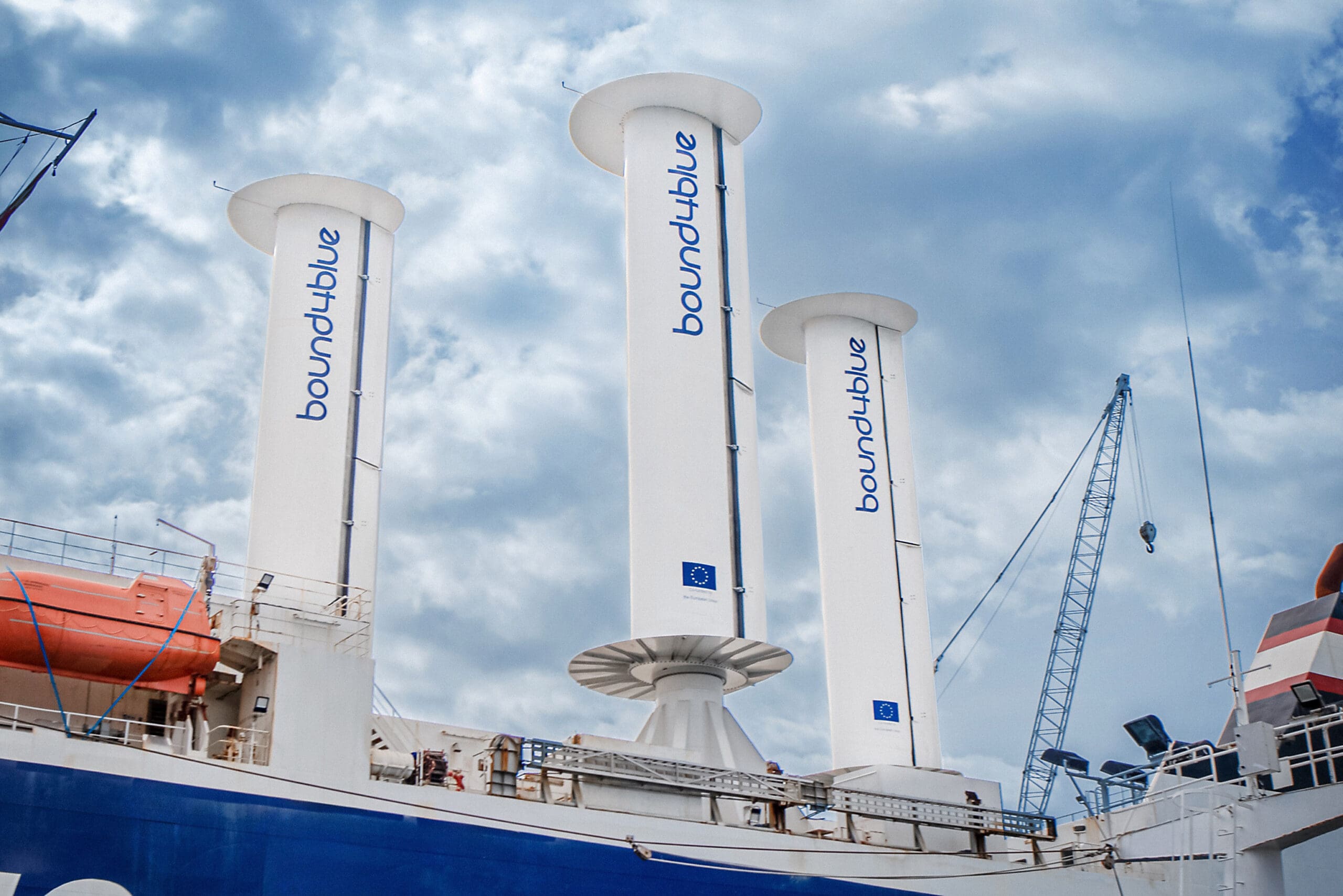
In March 2025, four eSAIL® Model 2 units, each measuring 22 m by 4.5 m, were installed onboard the MR tanker Bow Olympus during a retrofit project at EDR Antwerp Shipyard. The vessel, operated by Odfjell, is a 49,500 dwt tanker classed by DNV and trading on international (cross-Atlantic and cross-Pacific) routes.
A notable achievement of the project was the speed of installation. The complete fitting on deck process required only two days, demonstrating the practical feasibility of integrating the technology into existing vessels with minimal operational disruption.
Verified Performance Results
Published performance assessments were conducted for Bow Olympus by comparing actual vessel performance against historic operational data and sister vessels operating on the same trading patterns. This methodology enabled a realistic evaluation of the impact of the eSAIL® installation under commercial operating conditions.
The results demonstrated:
- 15-20% overall energy savings.
- Approximately 15 tonnes of CO₂ emissions reduction per day.
- Noticeable performance improvements under relatively light wind conditions even from approximately 15 degrees.
- Up to 18% reduction in fuel consumption on Cross-Pacific routes.
These outcomes provide evidence that wind-assisted propulsion can deliver significant commercial and environmental benefits in real-world operation.
Regulatory Relevance
Beyond fuel savings, eSAIL® offers a direct contribution to compliance with current maritime regulatory frameworks.
The technology is supported through the application of the “Wind Propulsion System Force Matrix” methodology, which enables direct incorporation of performance benefits into calculations associated with EEDI, EEXI, and FuelEU Maritime requirements. The methodology has been validated by DNV, providing confidence in the credibility and regulatory acceptance of the resulting performance assessments.
As environmental regulations continue to evolve and carbon costs increase, technologies capable of delivering verifiable efficiency improvements are likely to play an increasingly important role within vessel decarbonization strategies.
Market Adoption
The market response has been encouraging. Additional eSAIL® units have already been ordered for delivery through 2027, while the technology has expanded across multiple vessel segments, including tankers, bulk carriers, RoRo vessels, ferries, gas carriers, LNG carriers, and general cargo ships. At the time-being 13 vessels have been delivered, with 36 eSAIL® in operation while 13 additional eSAIL® units are on order.
Conclusion
The maritime industry’s decarbonization challenge requires solutions that are practical, scalable, and capable of delivering measurable results today. Bound4Blue’s eSAIL® technology demonstrates that wind-assisted propulsion can satisfy these requirements through a combination of advanced aerodynamics, operational simplicity, and independently verified performance for the applicable trading routes / patterns.
The Bow Olympus case provides compelling evidence that suction sail technology can achieve meaningful fuel savings, substantial emissions reductions, and improved regulatory performance under actual trading conditions. As shipowners continue to seek cost-effective pathways toward compliance and decarbonization, eSAIL® offers a proven opportunity to transform an abundant natural resource, wind, into measurable economic and environmental value.
